The acclaimed new novel from the author of The Corrections.
Patty and Walter Berglund were the new pioneers of old St. Paul - the gentrifiers, the hands-on parents, the avant-garde of the Whole Foods generation. Patty was the ideal sort of neighbour who could tell you where to recycle your batteries and how to get the local cops to actually do their job. She was an enviably perfect mother and the wife of Walter's dreams. Together with Walter - environmental lawyer, commuter cyclist, family man - she was doing her small part to build a better world.
But now, in the new millennium, the Berglunds have become a mystery. Why has their teenage son moved in with the aggressively Republican family next door? Why has Walter taken a job working with Big Coal? What exactly is Richard Katz - outré rocker and Walter's old college friend and rival - still doing in the picture? Most of all, what has happened to poor Patty? Why has the bright star of Barrier Street become "a very different kind of neighbour," an implacable Fury coming unhinged before the street's attentive eyes?
In his first novel since The Corrections, Jonathan Franzen has given us an epic of contemporary love and marriage. Freedom comically and tragically captures the temptations and burdens of too much liberty: the thrills of teenage lust, the shaken compromises of middle age, the wages of suburban sprawl, the heavy weight of empire. In charting the mistakes and joys of Freedom's intensely realized characters, as they struggle to learn how to live in an ever more confusing world, Franzen has produced an indelible and deeply moving portrait of our time.
Friday, 16 September 2011
Freedom - Jonathan Franzen
Sunday, 4 September 2011
Guns, Germs and Steel - Jared Diamond
Life isn't fair--here's why: Since 1500, Europeans have, for better and worse, called the tune that the world has danced to. In Guns, Germs, and Steel, Jared Diamond explains the reasons why things worked out that way. It is an elemental question, and Diamond is certainly not the first to ask it. However, he performs a singular service by relying on scientific fact rather than specious theories of European genetic superiority. Diamond, a professor of physiology at UCLA, suggests that the geography of Eurasia was best suited to farming, the domestication of animals and the free flow of information. The more populous cultures that developed as a result had more complex forms of government and communication--and increased resistance to disease. Finally, fragmented Europe harnessed the power of competitive innovation in ways that China did not. (For example, the Europeans used the Chinese invention of gunpowder to create guns and subjugate the New World.) Diamond's book is complex and a bit overwhelming. But the thesis he methodically puts forth--examining the "positive feedback loop" of farming, then domestication, then population density, then innovation, and on and on--makes sense. Written without bias, Guns, Germs, and Steel is good global history.
Sunday, 14 August 2011
Living Dolls - Natasha Walter
Empowerment, liberation, choice. Once the watchwords of feminism, these terms have now been co-opted by a society that sells women an airbrushed, highly sexualised and increasingly narrow vision of femininity. While the opportunities available to women may have expanded, the ambitions of many young girls are in reality limited by a culture that sees women's sexual allure as their only passport to success. At the same time we are encouraged to believe that the inequality we observe all around us is born of innate biological differences rather than social factors. Drawing on a wealth of research and personal interviews, Natasha Walter, author of the groundbreaking THE NEW FEMINISM and one of Britain's most incisive cultural commentators, gives us a straight-talking, passionate and important book that makes us look afresh at women and girls, at sexism and femininity, today.
Sunday, 31 July 2011
The Other Hand - Chris Cleave

We don't want to tell you too much about this book. It is a truly special story and we don't want to spoil it.
Nevertheless, you need to know something, so we will just say this:
It is extremely funny, but the African beach scene is horrific.
The story starts there, but the book doesn't.
And it's what happens afterwards that is most important.
Once you have read it, you'll want to tell everyone about it. When you do, please don't tell them what happens either. The magic is in how it unfolds.
Saturday, 16 July 2011
How Mumbo-Jumbo Conquered the World: A Short History of Modern Delusions - Francis Wheen

'A brilliant, eccentric book.' Observer Book of the Year 'Wheen has a Swiftian relish for exposing the cant that attends the 'new rationality'!bullshit's enema number one.' Tim Adams, Observer 'Hugely enjoyable!delightful reading.' Ferdinand Mount, Sunday Times 'Lightly and often hilariously told as it is, this book does make it clear that respect for truth and reason is retreating and mumbo-jumbo has a new confidence everywhere!This amusing, intelligent and elegantly argued book is as good a demonstration of the values it defends as could be imagined.' Philip Hensher, Spectator 'This book is a manifesto for rescuing the greatest philosophical movement of the past millennium. You have a choice: either read it or, pre-emptively shred your brain in anticipation of the coming darkness.' Independent on Sunday 'This book is a manifesto for rescuing the greatest philosophical movement of the past millennium. You have a choice: either read it or, pre-emptively shred your brain in anticipation of the coming darkness.' Independent on Sunday 'Such an entertaining writer. Wheen is, one senses, a good man to go tiger-hunting with; it is no less fun to watch him shooting fish in a barrel.' Noel Malcolm, Sunday Telegraph 'Very funny!a brilliant satiric essay.' Will Cohu, Daily Telegraph 'If Wheen's book succeeds in starting to shift the balance between reason and sentimentality, between lavish prompts of the heart and the colder ones of the brain, between rigorous analysis and twaddled cloaked in obscurity, then I think the ghost of Jefferson will have every right, every reason, to be proud of him.' David McKie, Guardian 'This book is a well-informed polemic that most enjoyably challenges you to think. Wheen cuts a Jonathan Swift-like swathe through the morass of tosh, hogwash, and it could be added, bullshit that threatens to clog our minds.' Peter Lewis, Daily Mail Francis Wheen is the intelligent sceptic's intelligent sceptic, and How Mumbo-Jumbo conquered The World casts a cold eye on fads in government, management and health that have swept the Anglo-Saxon world in the past 20 years. The urge to believe is unstoppable in most of mankind. The abundance of stupidity in this book is enough to make you pine for Ian Paisley.' Jeremy Paxman, Mail on Sunday 'One of the best reads you are likely to read this winter, full of spark and fine writing. FT Francis Wheen also writes about Samuel Huntington in the Independent magazine's 'Heroes & Villains' column. His piece on 'mad theories making a come back and politicians helping' ran in the Sunday Times News Review.
Thursday, 14 July 2011
The Beautiful and Damned - F. Scott Fitzgerald

Anthony and Gloria are the essence of Jazz Age glamour. A brilliant and magnetic couple, they fling themselves at life with an energy that is thrilling. New York is a playground where they dance and drink for days on end. Their marriage is a passionate theatrical performance; they are young, rich, alive and lovely and they intend to inherit the earth.
But as money becomes tight, their marriage becomes impossible. And with their inheritance still distant, Anthony ang Gloria must grow up and face reality; they may be beautiful but they are also damned.
Sunday, 3 July 2011
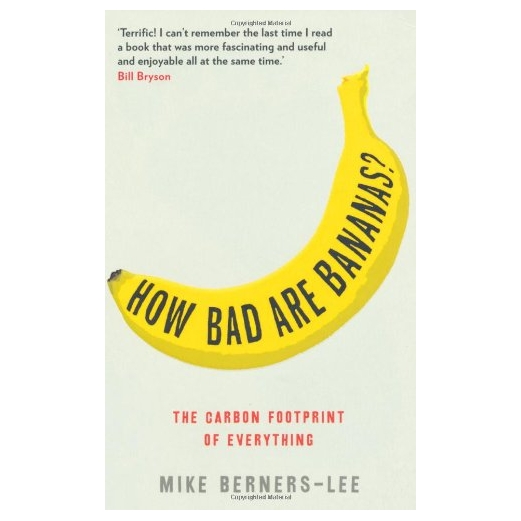
How Bad Are Bananas? - Mike Berners-Lee


Packed full of information yet always entertaining. From text messages and plastic bags to wars and volcanoes, How Bad Are Bananas? has the carbon answers we need
Subscribe to:
Posts (Atom)